There’s a version of grilled salmon that tastes like disappointment — pale, chalky, vaguely fishy in the wrong way. And then there’s this version. The kind where people go quiet for a moment after the first bite.
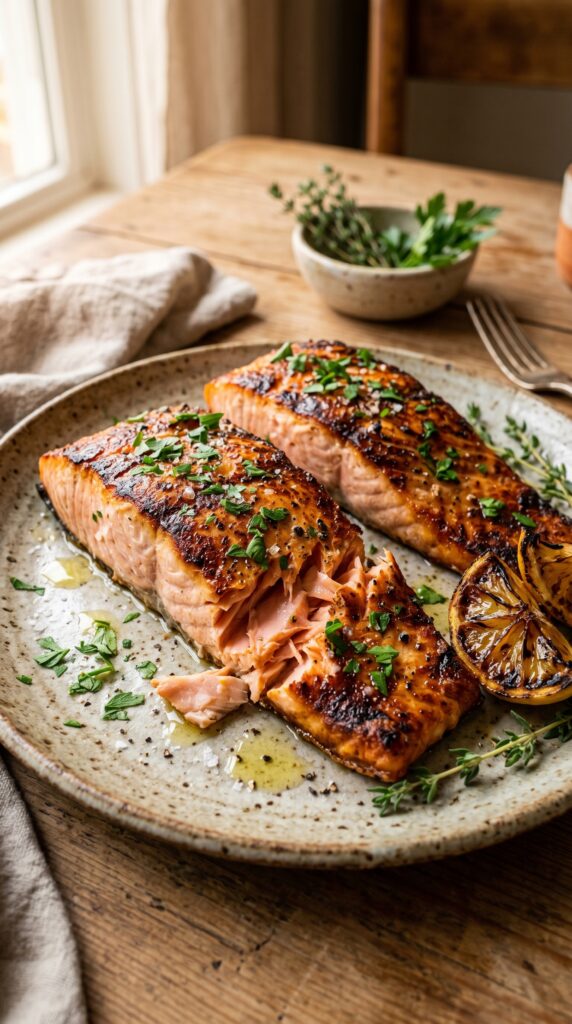
The difference isn’t technique or an expensive cut. It’s fifteen minutes of preparation and forty-five minutes of patience while the fish sits in a marinade doing all the work for you. I cook salmon year-round, but from the first warm weekend in May through the last embers of September, this marinade owns the backyard — and the grill is non-negotiable.
Ingredients You’ll Need
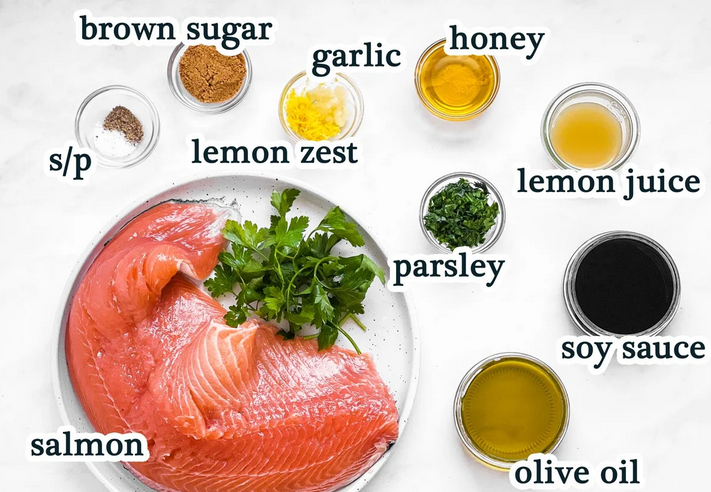
- 2 pounds salmon fillet — a whole skin-on side, or individual 6-oz portions
- ¼ cup olive oil — the backbone of the marinade; keeps everything cohesive
- ⅓ cup soy sauce — deep, savory saltiness and a subtle umami backbone
- 3 tablespoons fresh lemon juice — brightness and just enough acidity to lift the whole thing
- 1 tablespoon mild, runny honey — rounds off the sharpness and encourages caramelization on the grill
- 1 tablespoon brown sugar (optional) — adds a quiet molasses depth regular sugar can’t replicate
- 1 tablespoon fresh parsley, finely chopped — color, freshness, a faint herby note
- 4 garlic cloves, minced
- 1 teaspoon lemon zest, finely grated — this is where the citrus goes from background to lead
- Salt and black pepper, to taste — taste before adding, the soy sauce is already salty
Ingredient Notes
Salmon: A whole skin-on side is ideal — the skin insulates the flesh from direct heat and makes it far easier to lift cleanly off the grill. Individual portions work too, just know they cook faster and are slightly more prone to drying out.
Soy sauce: Regular or reduced sodium both work. Either way, taste the marinade before adding extra salt.
Honey: Use a clear, mild, runny variety. Thick or strongly flavored honey can overpower everything else.
Garlic: No fresh garlic? Half a teaspoon of garlic powder dissolves cleanly into the marinade and works better than you’d expect.
Variations Worth Trying
- Orange instead of lemon — Warmer and fruitier. Swap the juice and zest, but halve both the honey and sugar since orange brings its own sweetness.
- Add some heat — A tablespoon of freshly grated ginger and a pinch of red pepper flakes takes this into bolder territory. Great for adults, skip for kids.
- Make a dipping sauce — Set aside a small portion of the marinade before the raw fish touches it and serve alongside at the table.
- Turn it into kabobs — Cube the salmon into 2-inch pieces, marinate for 30 minutes, and thread onto soaked skewers alternating with thin lemon rounds. They cook fast, so watch them closely.
How to Marinate Salmon
Step 1 — Prep the fish: Pat the salmon completely dry — moisture repels oil-based marinades. Then run a fingertip down the center line of the fillet and remove any pin bones you find.
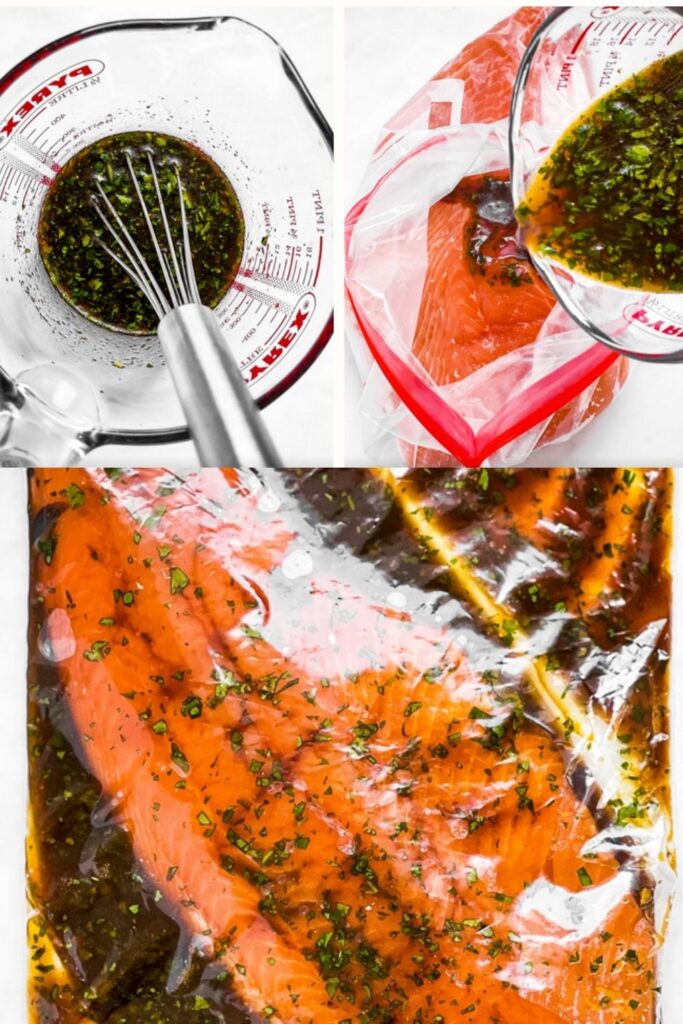
Step 2 — Make the marinade: Whisk all marinade ingredients together in a measuring jug until the honey and sugar are fully dissolved. Taste and adjust — it should be savory first, then sweet, then bright.
Step 3 — Marinate: Place the salmon in a large zip-top bag (3-quart minimum). Pour in the marinade, press out the air, and seal. Set the bag inside a shallow dish before refrigerating — insurance against leaks. Marinate for at least 20 minutes, ideally 30 to 60.
Step 4 — Remove and cook: Lift the salmon out and discard the bag and all remaining marinade. Never reuse marinade that has touched raw fish.
How Long Should You Marinate Salmon?
- Minimum: 20 minutes — enough to flavor the surface
- Ideal: 30 to 60 minutes — flavor penetrates without affecting texture
- Maximum: 4 to 6 hours — only if your schedule demands it
- Never: Longer than 6 hours — the texture will degrade beyond recovery
Always keep the salmon refrigerated throughout.
Cooking the Salmon: Two Ways
On the Grill
Preheat to 400–450°F and oil the grates generously before the fish goes on. Place the salmon skin-side down and don’t touch it.
- 10 to 12 minutes per inch of thickness is your general rule
- A 2-inch thick fillet takes around 20 minutes total
- Individual 6-oz fillets take 8 to 10 minutes
- Done when flesh is opaque three-quarters of the way up and flakes easily
- Rest on a plate for 5 minutes before serving
In the Oven
- Preheat to 375°F
- Place skin-side down in a lightly oiled shallow dish
- Whole fillet: 15 to 22 minutes — Individual portions: 12 to 15 minutes
- Rest for 5 minutes before serving
What Temperature Should Salmon Be Cooked To?
A meat thermometer takes all the guesswork out of this. Here’s what the numbers actually mean:
- 120–125°F — Where most chefs pull the fish, relying on carry-over heat during resting to bring it to 130°F
- 125–130°F — The sweet spot for home cooks wanting restaurant-quality results; a personal choice made at your own risk
- 145°F — The USDA’s official recommendation; fully safe for everyone including children, pregnant women, and immunocompromised individuals
I cook my and my husband’s salmon to 125°F, and the kids’ portions to 145°F every time without exception.
Tips for the Best Results
The details that make the real difference here are less about cooking and more about the steps before it.
Always dry the fish thoroughly before marinating, always use a dish under the bag in the fridge, and always oil the grates right before the fish goes on — even if they look clean.
Once it’s on the grill, resist the urge to move or flip it. And no matter what, let it rest before you serve it. Five minutes off the heat is when everything comes together.
Can You Freeze Marinated Salmon?
This recipe handles freezing surprisingly well. Marinate the salmon for up to an hour, drain off all the marinade, and pat the fish dry. Seal in a fresh freezer bag with the air pressed out, label it with the date, and freeze for up to three months.
Move it to the refrigerator the evening before you plan to cook — six to eight hours is enough time to thaw completely and safely. From there, cook it exactly as you would fresh-marinated salmon.
What to Serve With It
Keep the sides as easy and fresh as the main:
- Greek Orzo Salad or Mediterranean Couscous Salad — briny and bright, they echo the marinade’s saltiness perfectly
- Classic Potato Salad — make it ahead so it has time to absorb the dressing
- Summer Corn Salad — grilled corn, red onion, lime; minimal effort, maximum payoff
- Strawberry Spinach Salad — the acidity and sweetness cut through the richness of the fish beautifully
- Pineapple Coleslaw — a crowd-pleaser that also works as a palate cleanser
- Avocado Mango Black Bean Salsa or Easy Pineapple Salsa — excellent spooned directly over the fish
- Air Fryer Asparagus — under 15 minutes and holds well while the salmon rests
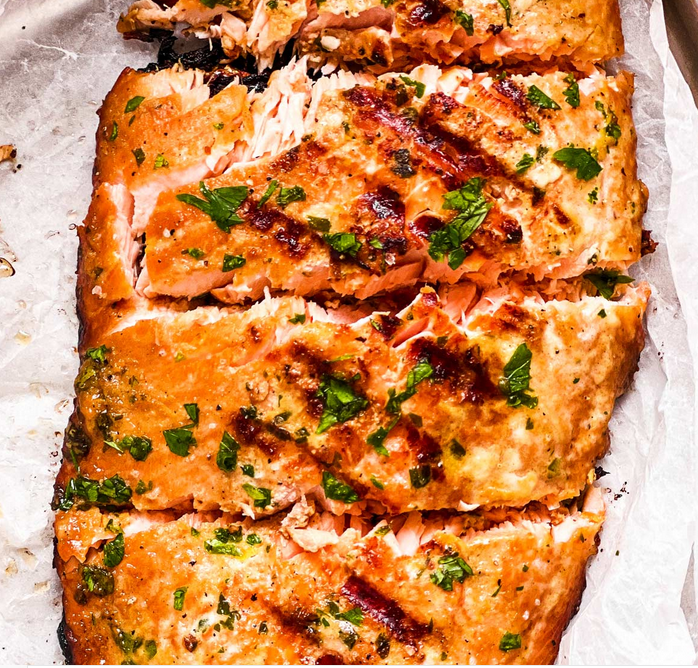
Salmon Marinade That Actually Earns Its Place on the Grill
There's a version of grilled salmon that tastes like disappointment — pale, chalky, vaguely fishy in the wrong way. And then there's this version. The kind where people go quiet for a moment after the first bite.Ingredients
Method
- Pat salmon completely dry and check for pin bones along the center line of the fillet; remove any you find.
- Whisk all marinade ingredients together in a measuring jug until the honey and sugar are fully dissolved. Taste and adjust seasoning.
- Place salmon in a large zip-top bag (3-quart minimum). Pour in the marinade, press out the air, seal, and set inside a shallow dish. Refrigerate for 30–60 minutes, or up to 4–6 hours if necessary.
- Remove salmon from the bag and discard the bag and all used marinade completely.
- To grill: Preheat to 400–450°F and oil the grates well. Cook skin-side down for 10–12 minutes per inch of thickness (8–10 minutes for individual fillets). Rest 5 minutes before serving.
- To bake: Preheat oven to 375°F. Place in an oiled shallow dish and roast for 15–22 minutes (12–15 minutes for individual fillets). Rest 5 minutes before serving.
Notes
Orange variation: Substitute orange juice and zest for lemon; halve the honey and sugar.
Add heat: Stir in 1 tablespoon fresh grated ginger and a pinch of red pepper flakes.
No fresh garlic: Use ½–1 teaspoon garlic powder instead.