There’s a particular kind of weeknight dinner that feels almost too easy to be as good as it is. This is one of those. Chicken breasts go into a baking dish, get coated in a balsamic, honey, and garlic sauce, and come out of the oven twenty minutes later glazed, juicy, and smelling absolutely incredible.
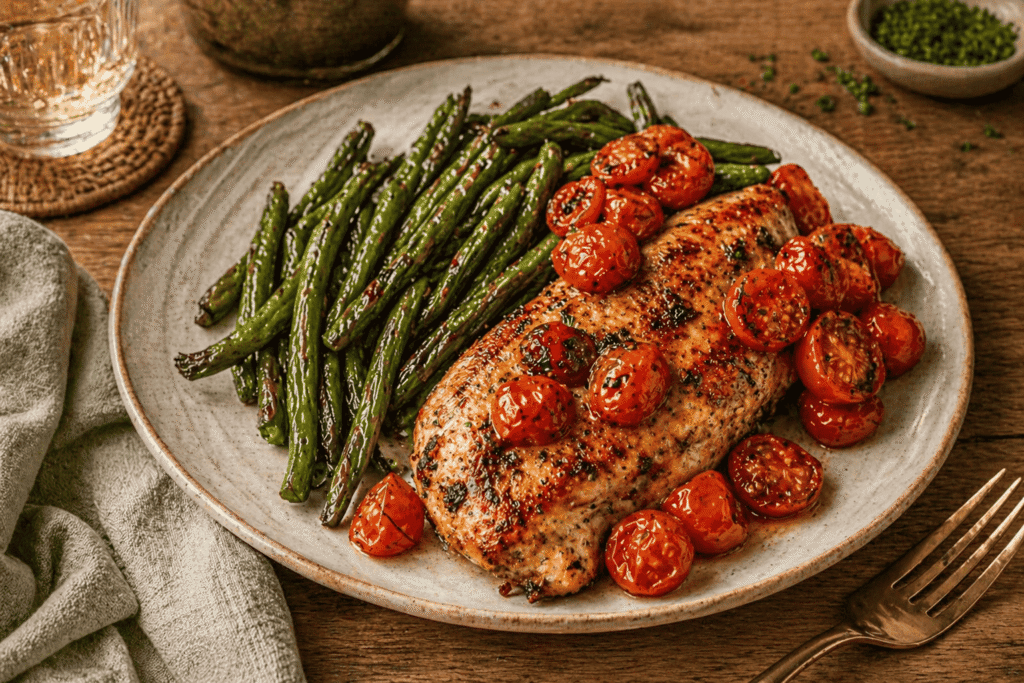
Cherry tomatoes roast alongside and collapse into something that’s halfway between a sauce and a side dish.
I keep coming back to this one because it asks almost nothing of you — ten minutes of prep, one dish to wash, and no standing over a hot stove.
The balsamic does something wonderful in the oven: it thickens, caramelises slightly at the edges, and clings to the chicken in a way that a stovetop pan sauce rarely manages. It’s the kind of dinner that looks considerably more effort than it was.
Ingredients
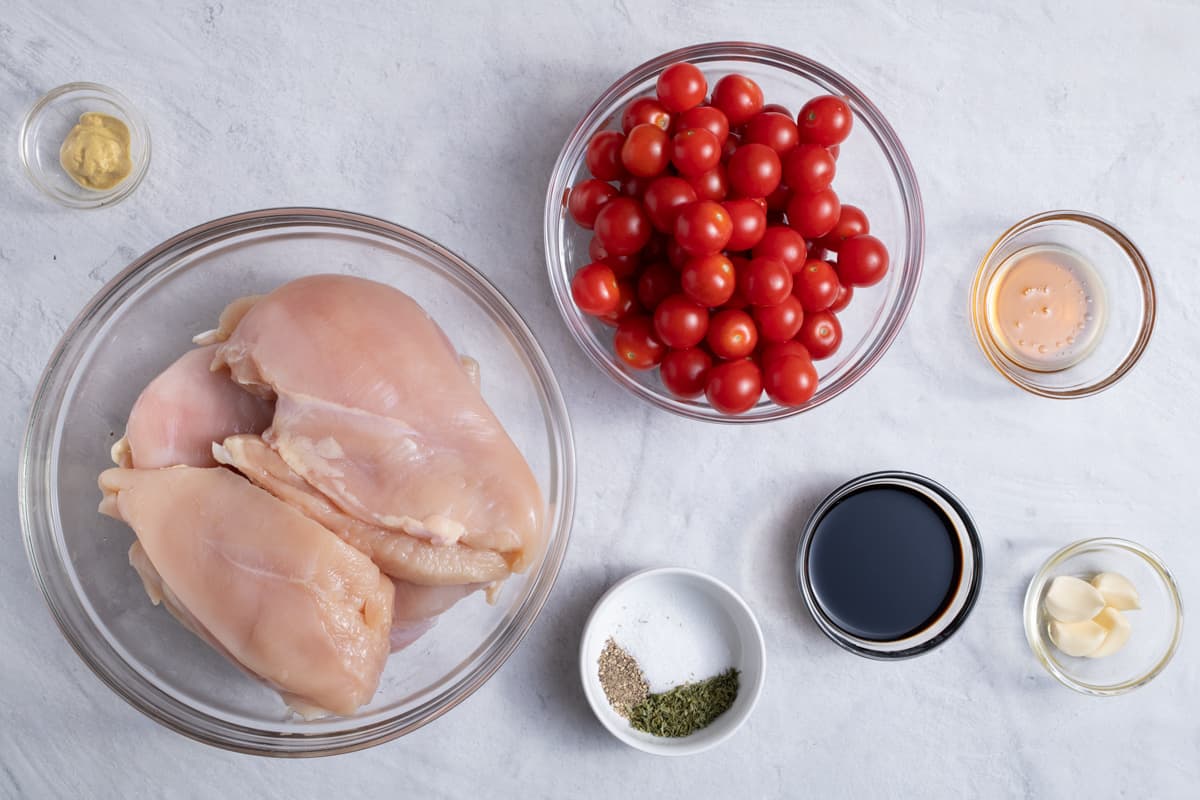
- Boneless, skinless chicken breasts — The workhorse of the weeknight kitchen. The key is pounding them to an even thickness before they go in, which is the difference between chicken that cooks through evenly and chicken with a dry edge and an undercooked centre.
- Balsamic vinegar — This is the heart of the recipe. As it bakes, it reduces and caramelises, coating the chicken in a deep, slightly sweet glaze. Use a decent bottle — nothing astronomical, but not the cheapest one on the shelf either.
- Honey — Balances the acidity of the vinegar and helps the sauce thicken and brown. Pure maple syrup works just as well if that’s what you have.
- Dijon mustard — Adds a quiet sharpness that keeps the sauce from tipping into sweet territory. It’s subtle enough that you won’t identify it as mustard, but you’d notice if it were missing.
- Garlic — Minced fresh, not powdered. Four cloves sounds like a lot; it isn’t. The flavour mellows beautifully as it bakes.
- Cherry tomatoes — They burst and soften in the oven, releasing their juice into the balsamic sauce and adding brightness to what would otherwise be quite a rich dish. Grape tomatoes work just as well.
- Dried basil, salt, and black pepper — The seasoning baseline. Fresh parsley goes on at the end, just before serving, for colour and a bit of freshness.
Variations and Substitutions
Chicken thighs work well here if you prefer darker meat — they’re more forgiving of an extra minute or two in the oven and come out even juicier than breasts. Bone-in thighs will need an extra 10–15 minutes, so keep a thermometer handy.
If you don’t have or don’t enjoy Dijon mustard, you can leave it out entirely. The sauce is still excellent without it. Whole grain mustard is a good swap if you want something a little more textured and interesting.
No fresh cherry tomatoes? A tin of whole cherry tomatoes, well drained, works in a pinch. Sun-dried tomatoes give a more concentrated flavour — use them sparingly as they’re much more intense than fresh.
Maple syrup can replace honey one-for-one. The flavour is slightly earthier but works beautifully with balsamic.
How to Make It
Preheat and prep. Get the oven to 425°F (220°C). While it heats, pat the chicken breasts completely dry with paper towels, then cover them with plastic wrap and pound to an even thickness using a meat mallet or rolling pin. Place them in a 9×13 oven-safe baking dish.
Mix the marinade. Whisk together the balsamic vinegar, honey, olive oil, Dijon mustard, dried basil, salt, pepper, and minced garlic in a small bowl until fully combined.
Coat and marinate. Pour the marinade over the chicken and flip each breast to coat evenly on both sides. Let it sit for at least 10 minutes — or up to 2 hours in the fridge if you’re prepping ahead. Don’t go beyond 2 hours; the vinegar will start to break down the texture of the meat.
Add the tomatoes. Halve the cherry tomatoes and scatter them around the chicken in the dish. They don’t need any seasoning — they’ll pick up everything from the marinade as they roast.
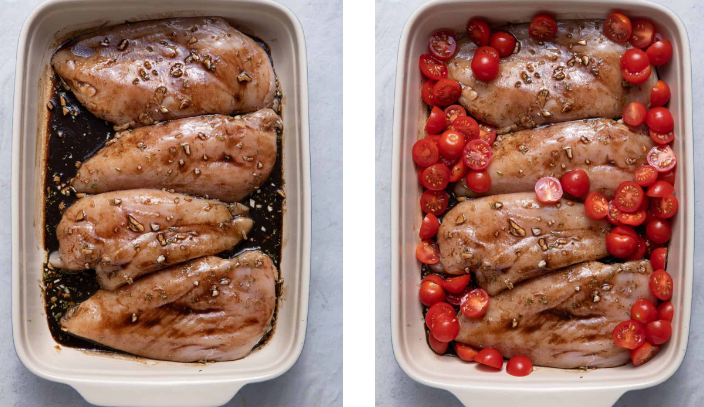
Bake until done. Slide the dish into the oven and bake for 20–25 minutes, until the thickest part of each breast reads 165°F (74°C) on an instant-read thermometer. The sauce should be thickened and caramelised at the edges.
Rest and garnish. Let the chicken rest in the dish for 5 minutes before serving — this keeps the juices inside where they belong. Scatter chopped fresh parsley over the top and serve.
Marinating Time: How Long Is Long Enough?
Ten minutes is the genuine minimum here, not a suggestion. Less than that and the flavour stays on the surface rather than working its way into the meat.
That said, longer is not always better with an acidic marinade. Balsamic vinegar is quite sharp, and beyond two hours it starts to denature the proteins on the surface of the chicken, giving it a slightly mushy, almost cured texture that isn’t what you want. The sweet spot is 30–60 minutes if you have the time — long enough for real flavour penetration, not so long that the texture suffers.
If you want to prep this well ahead of a dinner, make the marinade and pound the chicken, but keep them separate in the fridge. Combine them an hour before cooking.
What Separates Good from Great
Pounding the chicken to an even thickness is the step most people skip, and it’s the one that matters most. A chicken breast straight from the pack is thicker at one end than the other by nearly half an inch. That means one end is overcooked and dry by the time the other end is safe to eat. Two minutes with a rolling pin fixes this entirely.
Don’t skip the rest after baking. Five minutes under loosely tented foil lets the juices redistribute back through the meat. Cut into it immediately and they run straight onto the board.
Finally, get the oven properly hot. 425°F is higher than many chicken recipes call for, and that’s intentional — you want enough heat to caramelise the balsamic and get some colour on the tomatoes, not just steam everything gently.
What to Serve With It
- Steamed rice or couscous — both soak up the balsamic pan juices beautifully
- Creamy mashed potato for something more substantial
- Roasted vegetables or a simple rocket salad with lemon dressing
- Warm crusty bread for mopping the dish clean
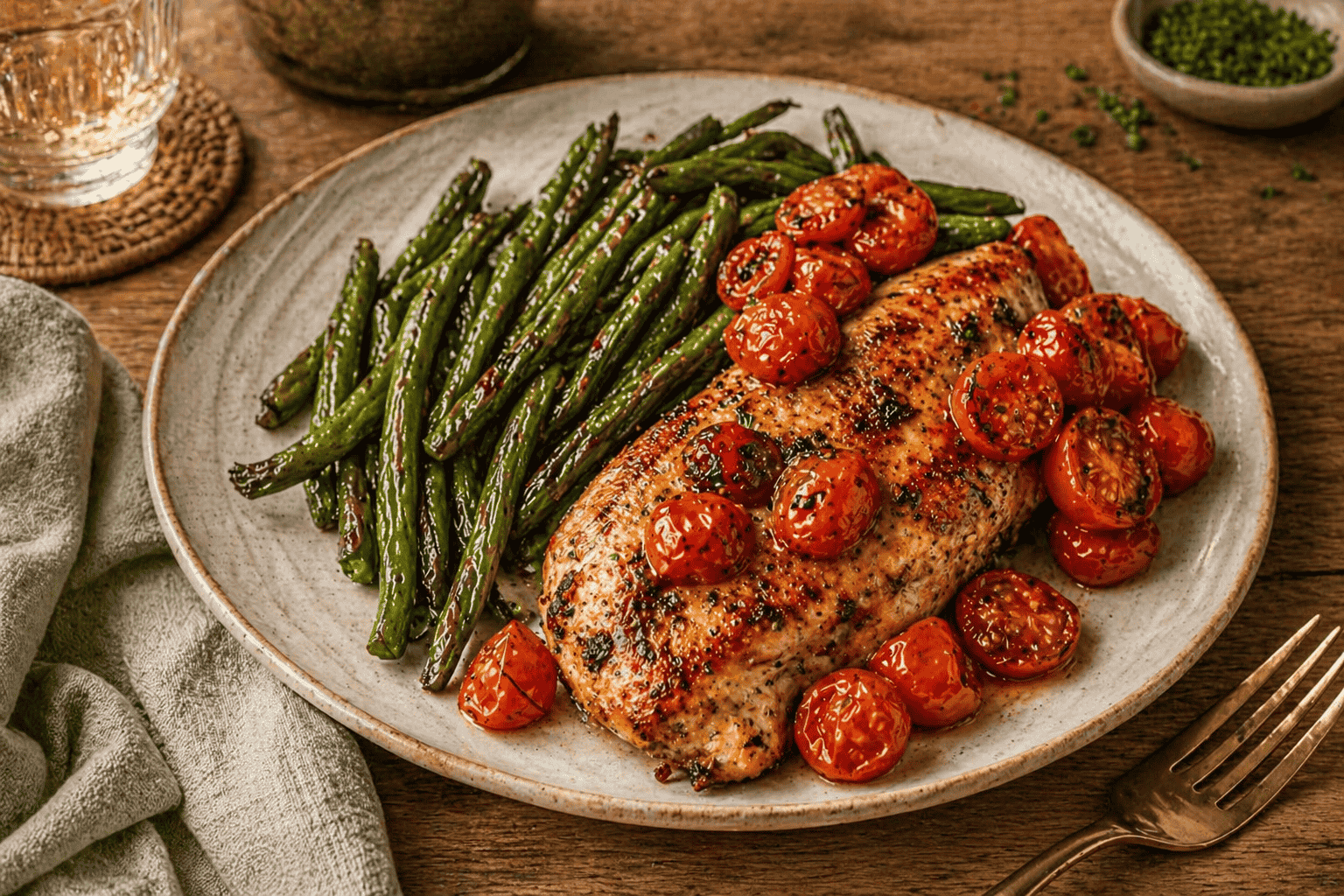
Oven Baked Balsamic Chicken
There's a particular kind of weeknight dinner that feels almost too easy to be as good as it is. This is one of those.Ingredients
Method
- Preheat oven to 425°F (220°C).
- Pat chicken breasts dry with paper towels. Cover with plastic wrap and pound to an even thickness using a meat mallet or rolling pin. Place in a 9×13 oven-safe baking dish.
- Whisk together the balsamic vinegar, honey, olive oil, Dijon mustard, dried basil, salt, pepper, and garlic in a small bowl.
- Pour the marinade over the chicken and flip to coat both sides evenly. Marinate for at least 10 minutes and no more than 2 hours.
- Scatter the halved cherry tomatoes around the chicken in the dish.
- Bake for 20–25 minutes, until the internal temperature at the thickest part reads 165°F (74°C) and the sauce is thickened and caramelised at the edges.
- Rest for 5 minutes, scatter with chopped parsley, and serve.
Notes
Chicken thighs can be used in place of breasts. Boneless thighs bake in the same time; bone-in thighs will need an extra 10–15 minutes.
Maple syrup can replace honey one-for-one.
Dijon mustard can be left out if preferred — the sauce is still excellent without it.
Do not marinate for longer than 2 hours; the vinegar will begin to affect the texture of the meat.